Nothing Slips Through: How AGO Reviews Thousands of Requirements Without Missing One
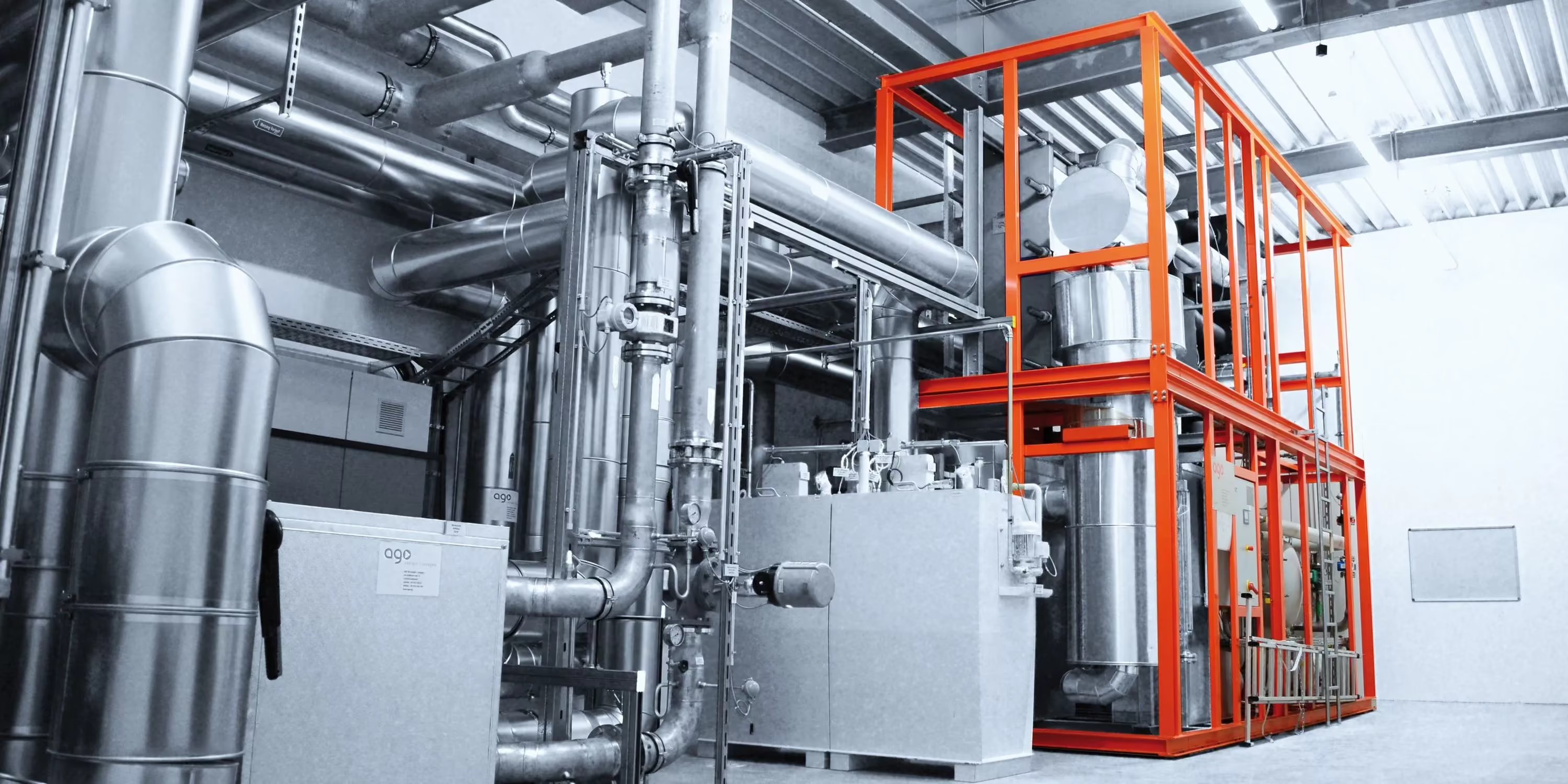
AGO GmbH Energie + Anlagen, a subsidiary of RheinEnergie, is a plant engineering company specializing in the planning and construction of highly efficient energy supply systems, including combined heat and power (CHP) units, large-scale industrial heat pumps, absorption chillers, and biomass heating plants, as well as ventilation and air conditioning systems. Through AGO Caldora, the company operates a dedicated division that manufactures large-scale high-temperature heat pumps.
Founded in 1980 and headquartered in Kulmbach, the company plans, engineers, builds, and services energy plants for industrial and municipal customers, from dairies and breweries to utilities and district heating operators.
AGO's systems are not off-the-shelf products. Every project is a complex, individually engineered solution, designed manufacturer-independently around each customer's specific processes, energy demand, site conditions, and economic targets. As a result, no two customer requests are alike, and each one must be individually configured, dimensioned, and calculated before AGO can decide how to respond and which solution to propose.
The tenders AGO responds to are correspondingly heavy. A single public tender can arrive as an entire document package with thousands of individual requirements spread across specifications, plans, contract terms, and standards documents. Interpreting them correctly requires deep knowledge of AGO's technology portfolio, feasibility boundaries, regulatory requirements, and commercial standards, knowledge that is distributed across departments such as process engineering, EMSR, construction, service, and commercial teams. Working through these packages manually in Excel and PDF meant substantial sorting and coordination effort, and critical deviations, extra-cost items, or infeasible requirements risked being identified late or missed entirely, with direct consequences for margins and proposal quality.

The Solution
AGO uses Atira to run its tender response process from incoming request to bid. Complete tender packages are transferred into Atira as received, with folder structures preserved, and processed entirely within Atira's closed, secure environment. All documents and data remain confidential inside the system. There, Atira automatically extracts and structures every individual requirement by discipline and routes it to the right department, from process engineering and EMSR to commercial and service teams, so specialists only see what is relevant to them. For every requirement, Atira suggests a proposal and confidence level, so engineers start from a qualified proposal instead of a blank page. Deviations from AGO's standard and requirements that trigger extra costs are flagged and commented directly in the tool, and structured deviation lists and Excel exports feed straight into AGO's quoting process.
Nothing Slips Through
AGO's core requirement was completeness: in tenders with thousands of requirements, a single overlooked clause can become an expensive obligation. Atira treats every sentence of the tender as a potential requirement and evaluates it, including side clauses that would previously have been skimmed over. Instead of working through documents superficially under time pressure, the team now works through a structured, prioritized list where critical points are surfaced early and every open item is visible.
From Thousands of Requirements to a Focused Workload
Atira's pre-sorting lets AGO reduce tender revisions down to the key aspects. Sales and proposal teams resolve the large majority of ToDos themselves using Atira's suggestions and AGO's captured knowledge, and only the genuinely difficult cases are escalated to specialist engineers, keeping scarce expert capacity focused on the decisions that determine the bid.
Expert Knowledge That Stays in the Company
Completed projects are marked as historical in Atira and become a growing reference base: comments, clarifications, and past evaluations feed the suggestions for every new tender. Recurring questions, such as whether a specific norm can be fulfilled or how a deviation was handled in a previous project, no longer need to be answered from scratch. Knowledge that previously lived in individual engineers' heads and scattered Excel files now becomes part of AGO's institutional memory and improves every future prediction and drafted response.
One Shared Process Across Departments
Every tender follows the same structured path: upload, extraction, classification, department assignment, expert review, deviation list, quote input. Requirements are assigned to departments and individual owners, progress and open questions are visible to the whole team, and cost-relevant items are marked and priced in one place. What was previously a fragmented coordination effort across Excel lists and email threads is becoming a shared operating model between AGO's commercial and technical organization.
